
 Installer portal
 Solar Academy
 Download
 Solar Terminal


Photovoltaics for car dealerships
Charging, lighting, air conditioning – all powered by solar energy from your own roof.
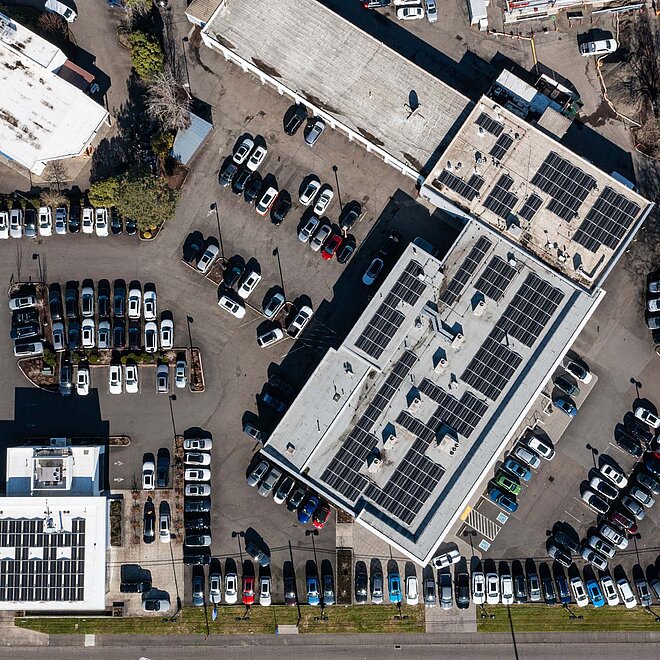
Car dealerships have an increasingly high demand for electricity. In addition to lighting, workshops, IT and building services, the charging infrastructure for electric vehicles is becoming particularly important. At the same time, sales, workshop and storage buildings often offer suitable roof space for photovoltaic systems.
With your own PV system, you can generate part of the energy you need directly on site. Solar power can be used within the car dealership, to charge vehicles or – if it is not needed immediately – fed into the grid or sold. In this way, the roof is transformed from an unused part of the building into an integral part of your energy supply.
Find a KOSTAL installer near you now
Why photovoltaics are of particular interest to car dealerships
The demands placed on car dealerships are changing. Electric mobility is expanding not only the range of vehicles on offer, but also the energy infrastructure at the site. This brings two developments into play:
Electricity demand is rising – and electricity can be generated on the dealership’s own roof.
- Reducing electricity costs: workshops, showrooms, outdoor areas, IT, ventilation and air conditioning all require a constant supply of energy. Solar power generated on-site can be used directly to power these systems, reducing the amount of electricity drawn from the public grid.
- Charging electric vehicles with your own solar power: As the number of electric vehicles grows, so too does the need for charging at car dealerships. Demonstration cars, customer vehicles, company cars or the dealership’s own fleet can all form part of a comprehensive energy strategy. Photovoltaic systems and charging infrastructure should therefore be planned together wherever possible.
- Utilising large building surfaces: Showrooms, workshops, used car showrooms and other business premises often have large roof areas. Photovoltaics make these areas usable for the dealership’s own energy supply without taking up additional land.
- Preparing the site for future electricity demand: As electrification increases, a car dealership’s load profile may change significantly. A PV system should therefore not be designed solely to meet current electricity consumption. Additional charging points and other future electrical loads should also be taken into account during the planning stage.
Where is solar power used in a car dealership?
A car dealership comprises a wide variety of electricity consumers. This is precisely what makes an analysis of the actual load profile so interesting. Solar power can, for example, be used for:
Charging infrastructure
: Demonstration vehicles, customer vehicles, company cars and other electric vehicles can be charged whilst on site.
Workshop
: Lifting platforms, compressors, diagnostic equipment, tools and other technical equipment require power during operating hours.
Showroom and lighting
: Sales areas and exhibition spaces often have a continuous demand for electricity throughout the day.
Air conditioning, ventilation and heating
: Large glass areas and sales areas can result in a corresponding energy requirement for building services.
IT and administration
: Servers, workstations, communication systems and other systems contribute to the site’s base load.
Outdoor areas
Lighting and other technical equipment on the premises can also form part of the energy strategy.
Thinking about photovoltaics and electric mobility together
Photovoltaics are of particular interest to car dealerships if energy generation is not viewed in isolation.
The key question is:
How can we supply a site with an ever-increasing number of electric vehicles with energy in the most intelligent way possible?
This can involve various charging processes:
- Demonstration cars are charged for the next test drive.
- New cars are charged before being handed over to customers.
- Company and staff vehicles remain at the site for several hours.
- Customers charge their vehicles whilst attending a workshop or consultation appointment.
- Further charging points will be added as the number of electric vehicles grows.
Not every vehicle needs to charge at maximum power at the same time.
A holistic energy strategy can therefore take into account PV generation, building consumption and charging requirements together.
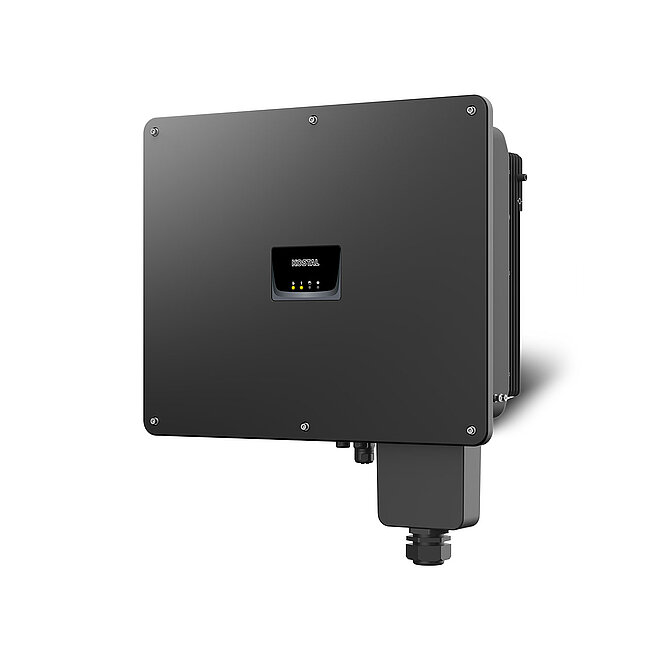
Photovoltaic inverters for car showrooms
For larger PV systems, in addition to efficient energy conversion, flexible system planning, professional communication and installation that is as straightforward as possible are key.
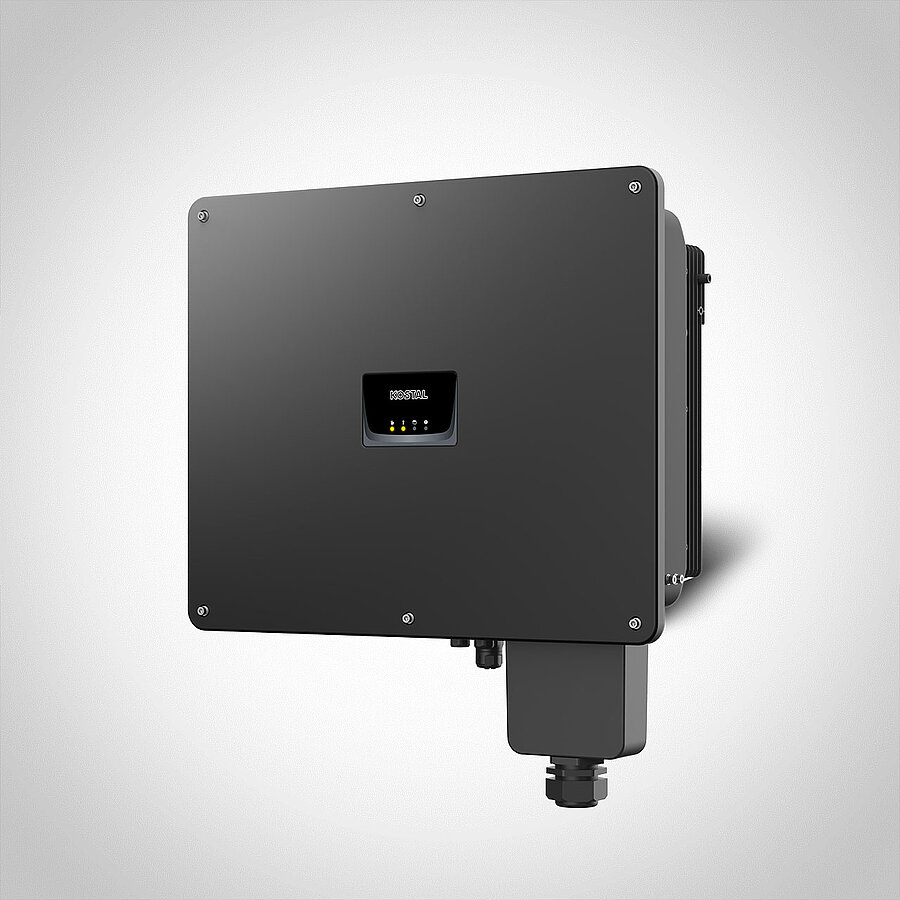
KOSTAL PIKO CI 30/50 G2
The PIKO CI G2 is designed for commercial photovoltaic projects and is available in
two power classes.
PIKO CI 30 G2
- 30 kW AC rated power
- Up to 45 kWp PV capacity
- 3 independent MPP trackers
- 6 DC inputs
PIKO CI 50 G2
- 50 kW AC rated power
- Up to 75 kWp PV capacity
- 4 independent MPP trackers
- 8 DC inputs
The PIKO CI G2 therefore offers a range of options for
designing PV systems for car dealerships.
Tip: You can find the latest data sheet in our downloads section
From car dealership to energy hub
Electric mobility is transforming car dealerships. Whereas in the past they were mainly places where vehicles were sold and serviced, they are increasingly becoming energy and charging hubs. Photovoltaics can provide the foundation for this:
Generate solar power → Power the building → Charge electric vehicles → Reduce grid consumption → Sell surplus energy
The sooner future charging and energy requirements are taken into account, the better the PV system can be tailored to the site’s development.
Would you like to supply your car dealership with its own solar power?
The appropriate scale of photovoltaic installation for your site depends on roof area, electricity consumption, charging requirements and future development. A qualified specialist contractor can assess these factors holistically and develop a suitable system concept based on them.
Turn your car dealership into an energy hub. Find a KOSTAL installer near you now