Installer portal
 Solar Academy
 Download
 Solar Terminal


Battery inverters from KOSTAL - Solar energy storage made easy
Adding a storage unit to a photovoltaic system is child's play when it comes to KOSTAL battery inverters. Benefit from the expertise of the company that took top place for its AC-coupled system efficiency.
KOSTAL battery inverters
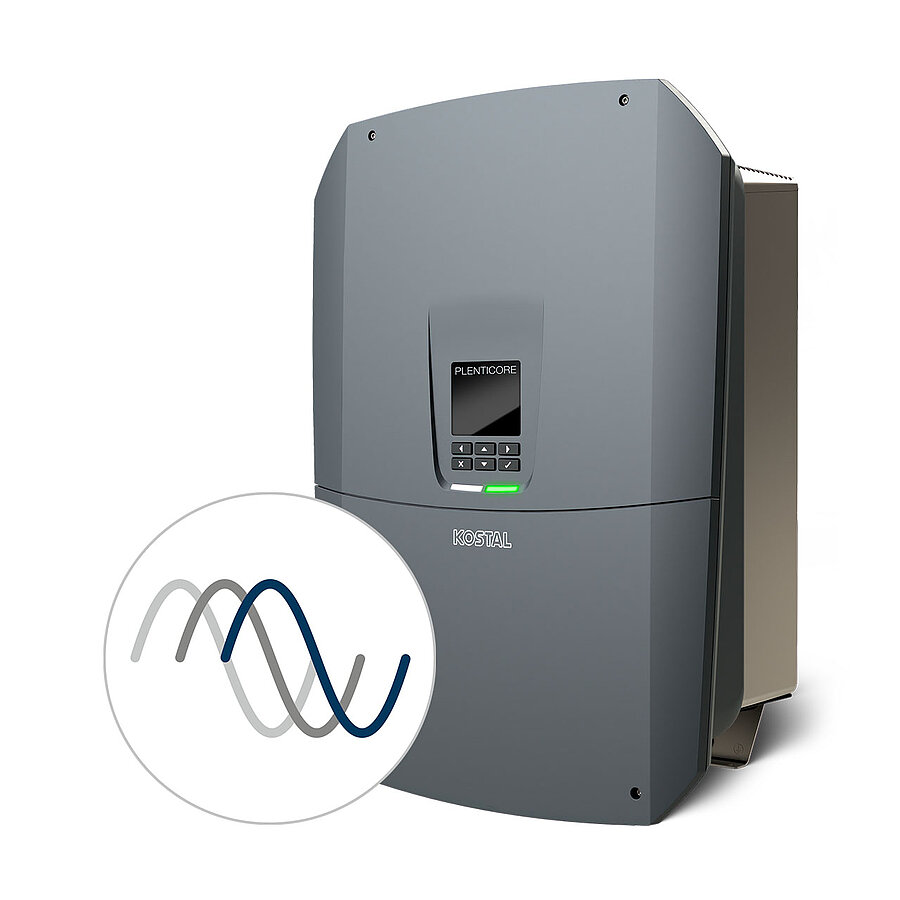
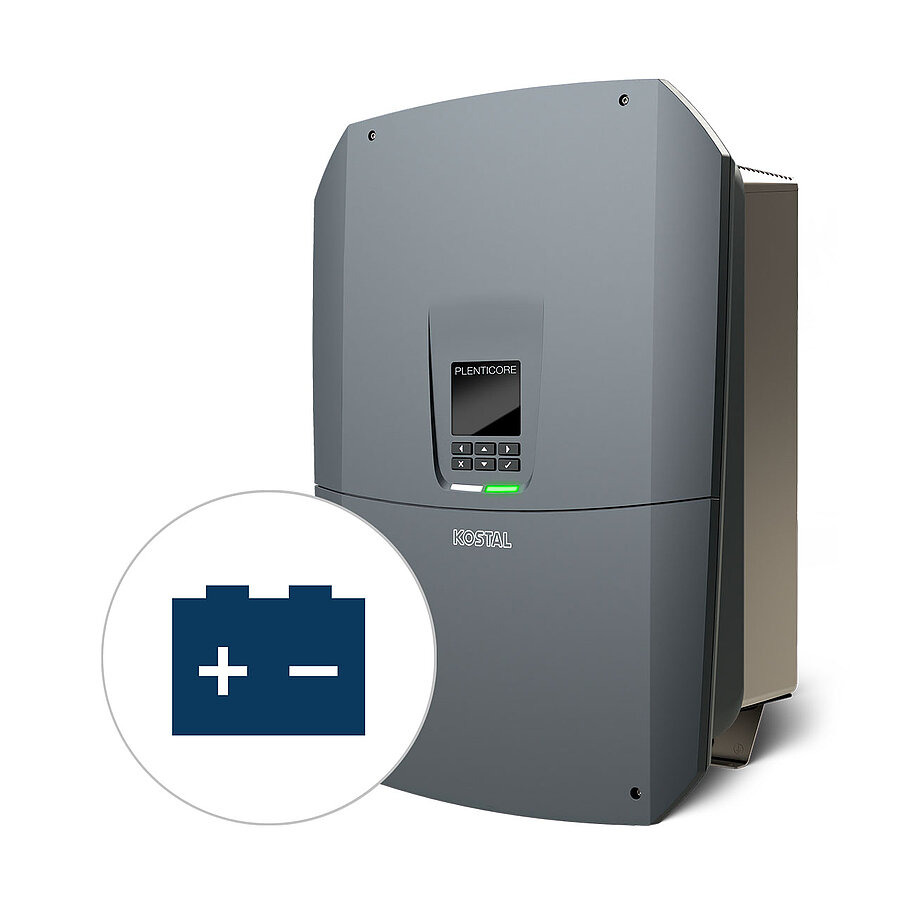
Pure battery inverters are particularly worthwhile for those who already own a photovoltaic system or want to set up a storage system independently of the PV system. They are simply connected to the AC grid in parallel with the PV system and the distribution is supplemented with the intelligent KOSTAL Smart Energy Meter. From then on the intelligent control software takes over: The storage unit is automatically charged with excess solar power and, if additional energy is required, it's discharged as needed.
A PV battery can help to significantly increase the level of self-consumption because the solar power generated during the day can be stored temporarily and can also be used after sunset.
Battery inverters from KOSTAL
Simple storage of solar power for more self-consumption

Increase your self-consumption thanks to solar power storage
Photovoltaics generates electrical energy from sunlight and is considered a renewable energy source. And anyone can do it on their own roof. However, photovoltaic systems without storage only generate electricity during the day and, if there's no storage facility available, the electricity can only be used when it's generated.
By using storage systems, which have now become very affordable, the self-generated solar power can also be put to use after sunset. This leads to higher self-consumption rates and reduces electricity costs as less electricity has to be purchased from the grid operator. A storage system ensures greater independence from the energy supplier.
FAQ: KOSTAL battery inverters explained
A battery inverter is an inverter designed exclusively to operate a battery storage system. It is installed in addition to an existing PV inverter and is particularly suitable for retrofitting battery storage systems into existing photovoltaic installations. Whilst the PV inverter converts the direct current generated by the solar panels into alternating current, the battery inverter handles the charging and discharging of the storage system, as well as supplying the stored energy to the household.
A battery inverter is connected to the domestic mains supply on the alternating current (AC) side and works in conjunction with the existing PV inverter. It detects when surplus solar power is available in the home and uses it to charge the battery storage system. If electricity demand later increases or the photovoltaic system is no longer generating energy, the battery inverter converts the energy stored in the battery into alternating current and feeds it into the domestic mains supply. This means that the solar power generated by the system can also be used outside of daylight hours without the need for any modifications to the existing PV system.
A battery inverter is ideal for anyone wishing to add battery storage to their existing energy system – without having to replace the existing PV inverter. Particularly for existing installations, this AC-coupled retrofit allows the battery storage to be easily integrated into the existing energy system.
Furthermore, a battery inverter is also a suitable solution for new builds with specialised system configurations or larger photovoltaic installations. It can store energy not only from a photovoltaic system, but also from other AC energy sources such as a combined heat and power (CHP) unit or a wind turbine. This allows surplus energy from various sources to be efficiently stored temporarily and used when required.
Depending on the power rating, battery inverters are suitable for both detached houses and commercial and agricultural applications. They offer a flexible storage solution for anyone wishing to increase their self-consumption, reduce energy costs and optimise their self-sufficiency in a sustainable manner.
A battery inverter such as the PLENTICORE BI enables the flexible integration of a battery storage system into existing and new energy systems. Particularly in the case of larger photovoltaic systems in the commercial or agricultural sectors, surplus energy can be stored efficiently and used as and when required – without having to replace the existing PV inverter.
With the new PLENTICORE BI 25, KOSTAL is expanding the range of applications to include higher-power systems. The high charging and discharging power enables peak loads to be met quickly using energy from the battery storage system. This allows businesses to optimise their self-consumption, reduce electricity procurement costs and make their energy management more cost-effective.
A further advantage is the ability to store energy not only from solar power but also from other AC energy sources – such as combined heat and power (CHP) units or wind turbines. This creates a flexible storage solution for a wide variety of energy concepts.
A hybrid inverter combines a PV inverter and a battery inverter in a single unit. It processes the direct current generated by the solar panels and charges or discharges the battery storage system directly. This solution is particularly suitable for new photovoltaic systems.
A battery inverter such as the PLENTICORE BI, on the other hand, is installed in addition to an existing PV inverter. It is solely responsible for integrating the battery storage system and is connected to the energy system on the AC side. This allows existing photovoltaic systems to be easily expanded to include storage without having to replace the existing PV technology.
This AC coupling offers decisive advantages, particularly for larger commercial systems: storage solutions can be flexibly retrofitted or expanded and can draw energy from various AC energy sources.
A battery storage system increases self-consumption and makes self-generated energy available exactly when it is needed. This reduces the amount of electricity drawn from the public grid and improves the cost-effectiveness of the entire energy system.
Battery storage is becoming increasingly important for businesses too. When combined with a high-performance battery inverter such as the PLENTICORE BI 25, high loads can be supplied from the storage system at short notice. This helps to reduce peak loads (peak shaving), lower energy costs and make more efficient use of existing self-generated energy.
Furthermore, depending on the system configuration, the battery storage system can draw energy from various AC energy sources. This makes the solution suitable not only for traditional photovoltaic systems, but also for more complex energy systems in the commercial or agricultural sectors.
An AC-coupled storage solution offers maximum flexibility when expanding existing energy systems. The battery inverter is installed separately from the PV inverter and can therefore be easily integrated into existing photovoltaic systems. Existing components are retained and investments are protected.
With the PLENTICORE BI 25, this technology is now also available for larger commercial applications. Thanks to its high charging and discharging capacity, the solution is suitable for businesses with high energy requirements and dynamic load profiles. At the same time, different AC energy sources – such as photovoltaics, combined heat and power units or wind energy – can be integrated into a single storage concept.
The result is a future-proof storage solution for homes, commercial premises and agricultural applications that can be flexibly adapted to growing energy requirements.
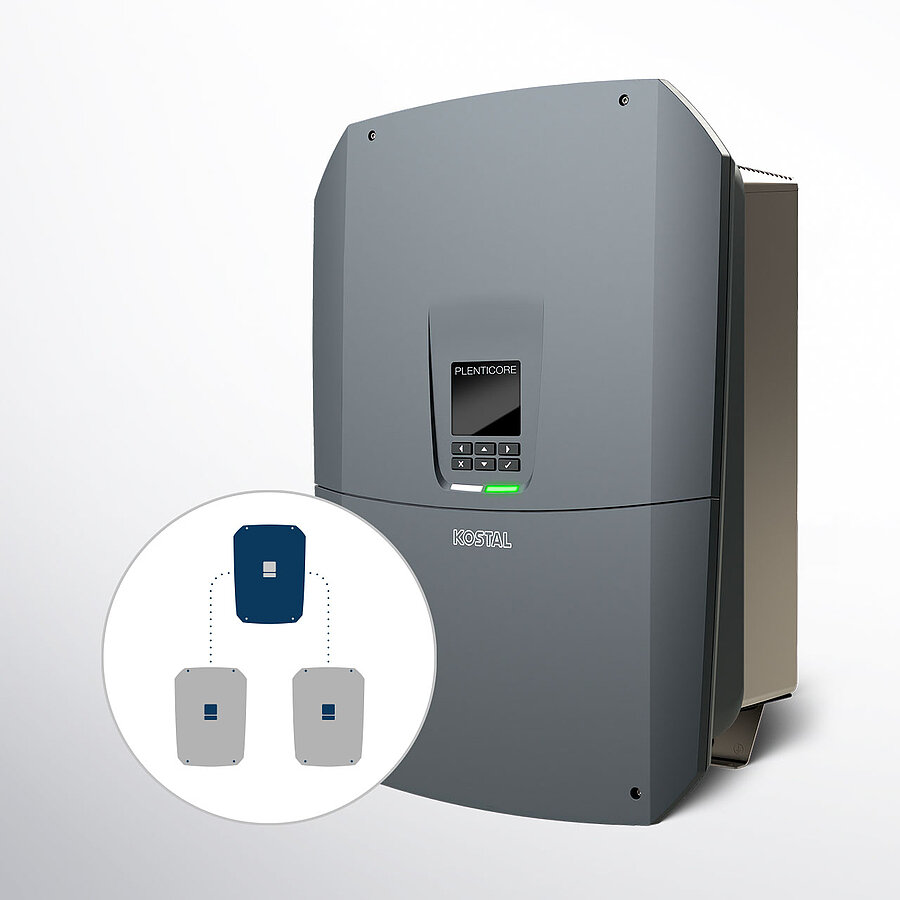
Yes. With Multi Device Control (MDC), up to three approved battery storage systems can be operated in parallel – without the need for an additional combiner box. Control is managed centrally via a PLENTICORE G3 acting as the MDC host. This ensures that charging and discharging processes are optimally coordinated and that storage units with different capacities are utilised efficiently. This requires the use of approved storage units and the ‘Battery Control with MDC’ product extension.
Copy URL to clipboard