
 Installer portal
 Solar Academy
 Download
 Solar Terminal


Photovoltaics for commercial use
Turn your company’s roof into your own source of energy.
Generate solar power where you need it: on your own premises. A photovoltaic system can reduce your electricity costs, minimise your dependence on the energy market and make economic use of existing roof space.
Why photovoltaics is
particularly attractive for businesses
Many businesses require a large proportion of their energy precisely when a photovoltaic system is generating electricity: during the day. The better the alignment between electricity generation and consumption, the more solar power can be used directly on the premises. It is precisely this simultaneous self-consumption that is a key factor in the cost-effectiveness of a commercial PV system.
Reducing
electricity costs Every kilowatt-hour generated on-site and consumed directly reduces the amount of electricity drawn from the grid.
Making
energy costs more predictable: part of future electricity demand will be met by the company’s own generation system.
Making
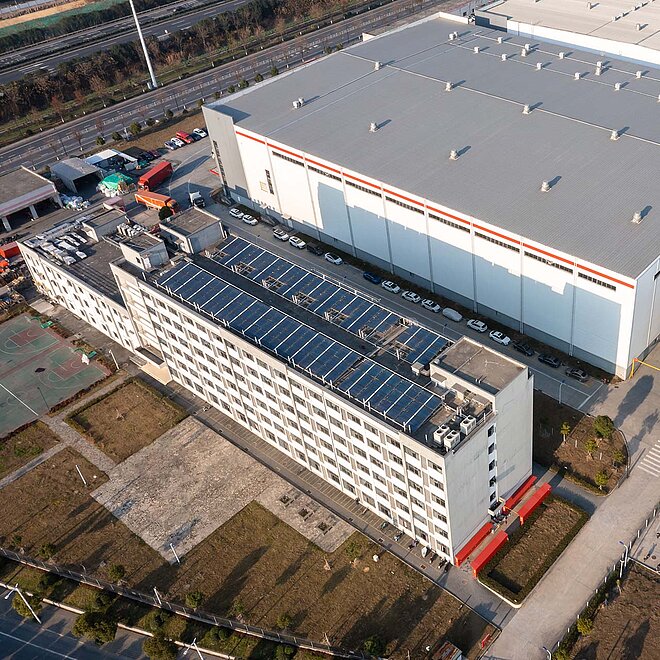
economic use of roof space Production, commercial and warehouse buildings often offer large areas suitable for generating solar power.
Electrifying
businesses: PV can form part of a wider energy strategy – for example, in conjunction with charging infrastructure, storage systems or other electrical consumers.
Find a KOSTAL installer near you now
Tip: Can’t be bothered to search? We can also put you in touch with the right installer.
Is solar power right for your business?
The largest possible PV system is not automatically the most cost-effective. The key factor is that the roof area, electricity consumption, load profile and system design are all well-matched. For a sound economic analysis, the temporal pattern of consumption and PV generation is particularly relevant.
You should answer these questions before you start planning
- How much electricity does your business use?
Annual consumption is a first point of reference. Even more telling is when the electricity is actually needed. - When do you need the most electricity?
High consumption during daylight hours may indicate a high level of direct self-consumption. - How much suitable roof space is available?
Size, orientation, shading, structural integrity and existing roof installations all influence the potential PV output. - How should surplus solar power be utilised?
In addition to self-consumption, feeding into the grid and – depending on the system design and regulatory requirements – direct sales are options. Various operating models are also possible.
Not all businesses are the same
The ideal solar PV system depends very much on how your business uses energy.
Manufacturing & Industry
High electricity demand during operating hours meets large factory roofs.
→ Photovoltaics for production halls
Agriculture
Livestock sheds, barns and machinery sheds offer large roof areas; at the same time, varying electrical loads arise during operation.
→ Photovoltaics for agriculture
Logistics & Warehousing
Large warehouse roofs offer considerable PV potential. Depending on the consumption profile, self-consumption can be combined with the sale of surplus electricity.
→ Photovoltaics for warehouses
Retail & other commercial premises
Supermarkets, car showrooms, garages, hotels and office buildings can benefit in particular from high electricity demand during the day.
From the roof area to the right PV system
Would you like to use your commercial roof for a photovoltaic system?
Whether it’s a production hall, workshop, farm or logistics centre: the key is a PV concept that suits your roof area, energy consumption and your business’s future development.
A qualified specialist contractor can assess your roof’s potential, load profile and technical requirements, and use this information to design the right system for you.
Take the first step towards generating your own solar power.
Find a KOSTAL installer near you now