Installer portal
 Solar Academy
 Download
 Solar Terminal


Using solar power directly
in your own business
Many businesses require a particularly high amount of energy during the day –
and that is exactly when a solar power system can supply its own electricity

Production meets consumption
Photovoltaics generate electricity mainly during the day. It is precisely during these hours that machinery, plant, cooling systems, ventilation, IT and lighting are in operation in many businesses. This is what often distinguishes commercial premises from private households, where a larger proportion of electricity demand occurs in the mornings and evenings.
This can offer a significant advantage for businesses: solar power is generated exactly where it is needed. Instead of first drawing energy from the public grid, the photovoltaic system can meet part of the ongoing electricity demand directly on the business premises.
Would
you like your own solar system for your business?
Find your nearest KOSTAL installer on our overview map.
Daily consumption as an advantage
Many commercial processes take place during normal working and operating hours. Production machinery runs during the day, office workstations require energy, and retail premises are lit and air-conditioned. Workshops, logistics centres and agricultural businesses also often have a significant daily energy consumption.
At the same time, the output of the photovoltaic system rises in the morning, peaks during the day and declines again in the evening. This means that electricity generation and demand can complement each other well.
The greater the overlap in these time frames, the more solar power can be used directly within the business.
Understanding load profiles
The amount of solar power that can be used directly depends on the company’s individual load profile. The load profile shows when and how much electrical power is required. This can vary significantly from one company to another.
A manufacturing plant operating multiple shifts has a different profile to an office building. Cold stores require energy even at night. A car dealership has different requirements to a farm.
That is why the load profile is a key basis for planning. When compared with the expected PV generation, it becomes clear when the company’s own solar power coincides with a suitable operational demand.
Targeted increase in self-consumption
Not all electricity consumption is fixed in terms of timing. Certain processes can take place earlier or later, depending on operations. These may include, for example, charging processes, pumping, cooling or other controllable loads.
Such flexibility can be utilised to align electricity demand more closely with the available solar energy.
Instead of operating a flexible load at a time when PV generation is low, consumption can, where possible, be shifted to sunnier hours. This increases direct self-consumption without necessarily having to generate additional energy.
The available solar power is simply used in a more targeted manner.
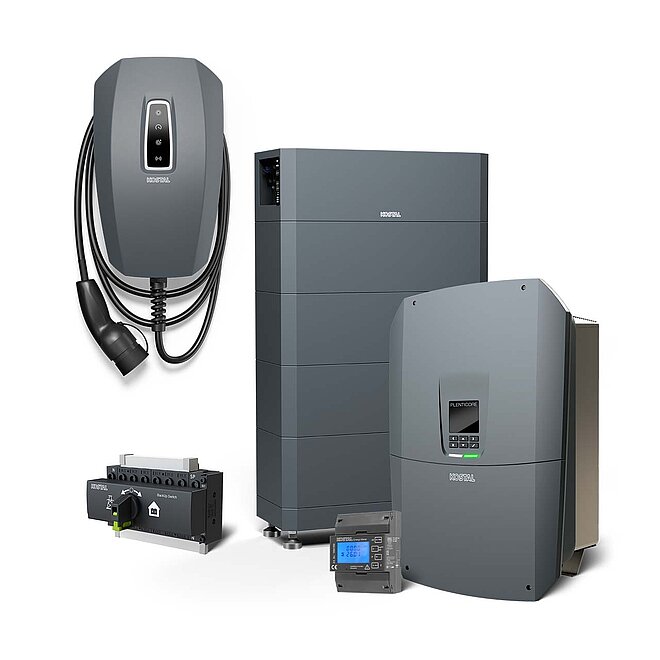
Curious? Find out more about the KOSTAL complete system comprising an inverter,
storage unit and wallbox. Simply download the latest leaflet!
Making good use of surpluses
Even when daily consumption is high, the photovoltaic system may at times generate more energy than is immediately required for operations. Such surpluses open up further possibilities.
The energy can be fed into the public grid, stored temporarily in a battery storage system, or used to power additional flexible loads.
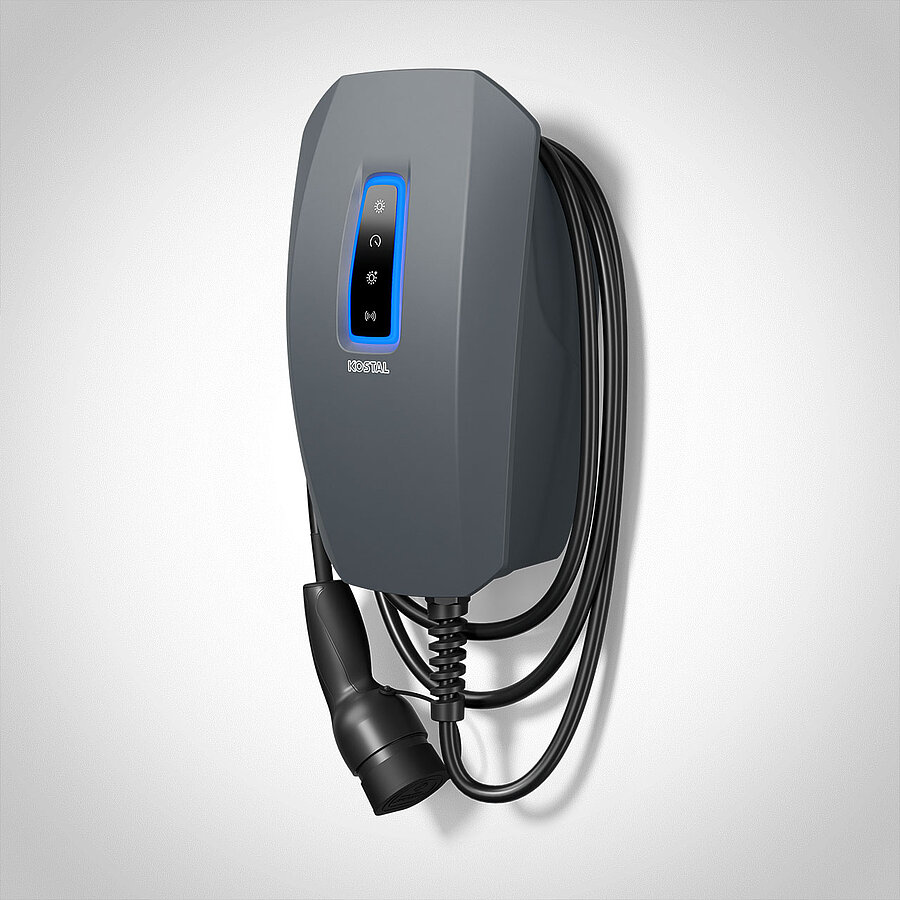
Charging infrastructure can also be of interest here: if company vehicles or those belonging to staff and customers are parked on site during the day, available solar energy can be used for charging.
Consequently, the question ‘How much solar power are we currently using?’ is increasingly giving way to the question ‘Where else can we put the available solar power to good use?’
Storage fills the gaps
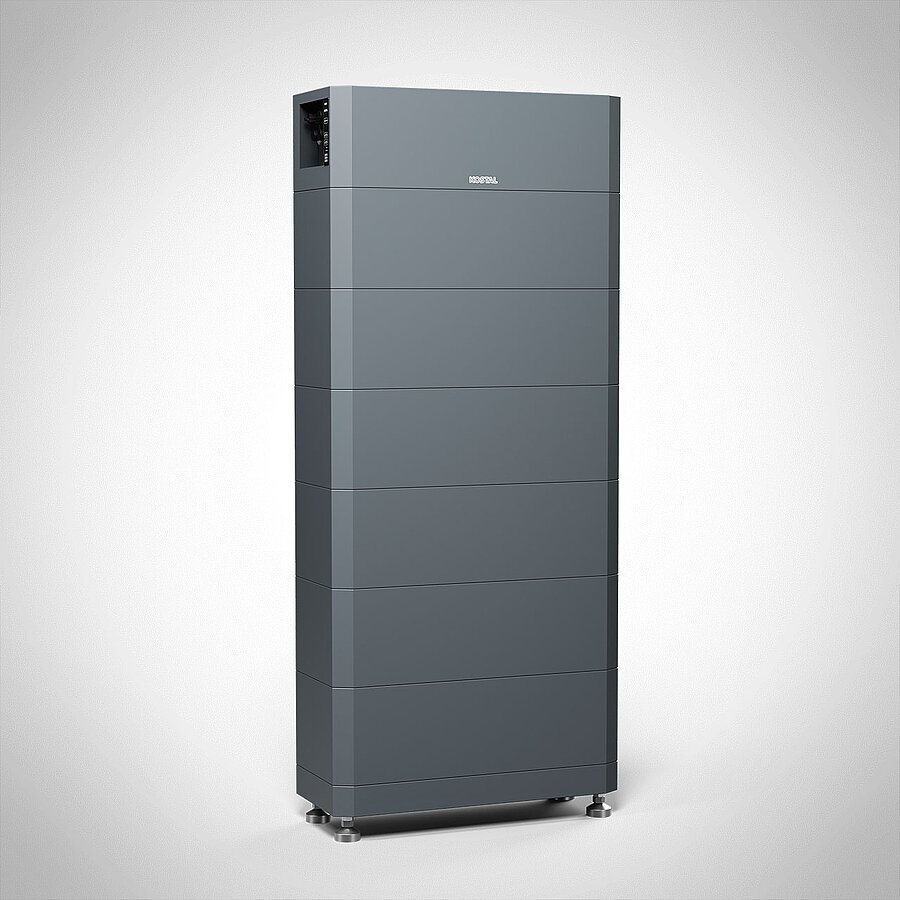
Not every business can fully align its electricity consumption with its solar power generation. A battery storage system provides additional flexibility in terms of timing. Solar power that is not immediately needed during particularly high-yield hours can be stored and made available later.
This is particularly useful, for example, when energy demand remains high in the late afternoon, whilst the output from the photovoltaic system is already starting to decline. The storage system thus aligns generation and consumption even when the two do not coincide exactly in terms of timing.
Furthermore – provided it is appropriately designed – it can take on additional tasks within the business’s energy system.
Distributing energy intelligently
With photovoltaics, battery storage and multiple electrical loads, the possibilities for energy distribution also increase. Should available solar power be fed directly into production? Can a vehicle be charged? Is there a surplus for the battery storage system? Which loads can be controlled flexibly over time?
An energy management system provides transparency regarding these energy flows and can help to better coordinate generation, storage and consumption. The aim is to make sensible use of as much of the energy generated on-site as possible within the site itself. Individual consumers thus form an increasingly interconnected energy system.
Planning for tomorrow’s consumption
A company’s energy requirements can change. New machinery, electric company vehicles, charging infrastructure or the electrification of further processes can increase electricity consumption.
What is currently fed into the grid as surplus solar power may therefore supply a new consumer on-site in the future. When planning a photovoltaic system, it is worth not only considering the current load profile but also taking into account possible developments in the coming years.
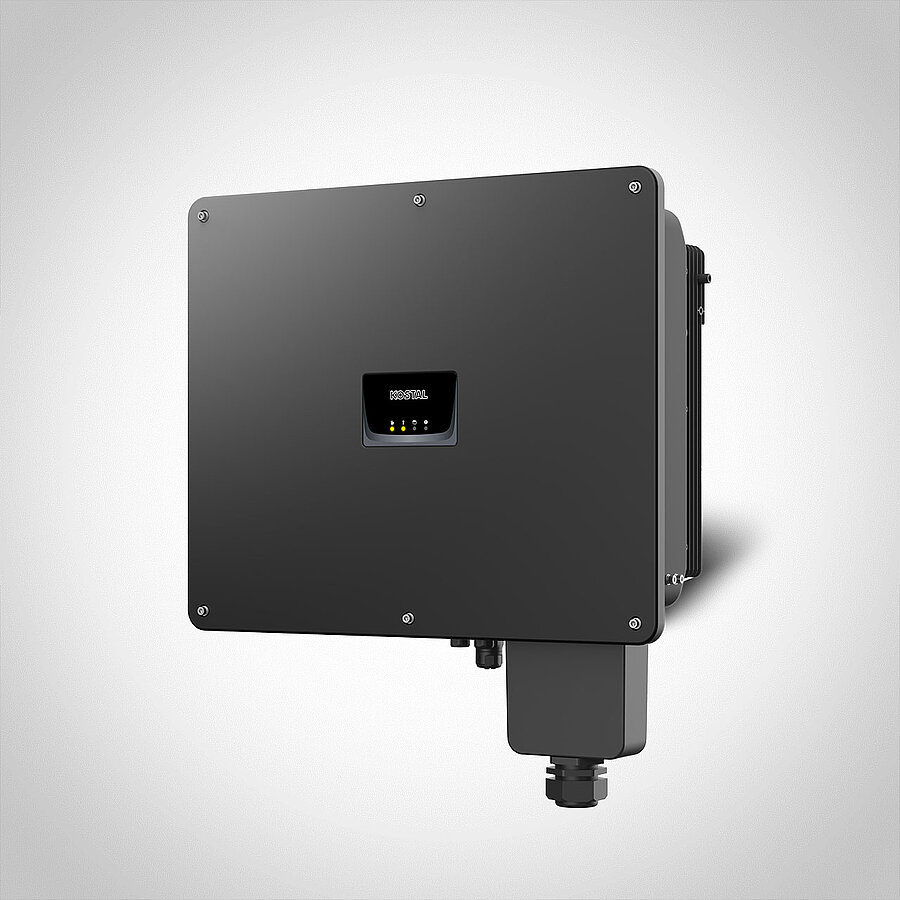
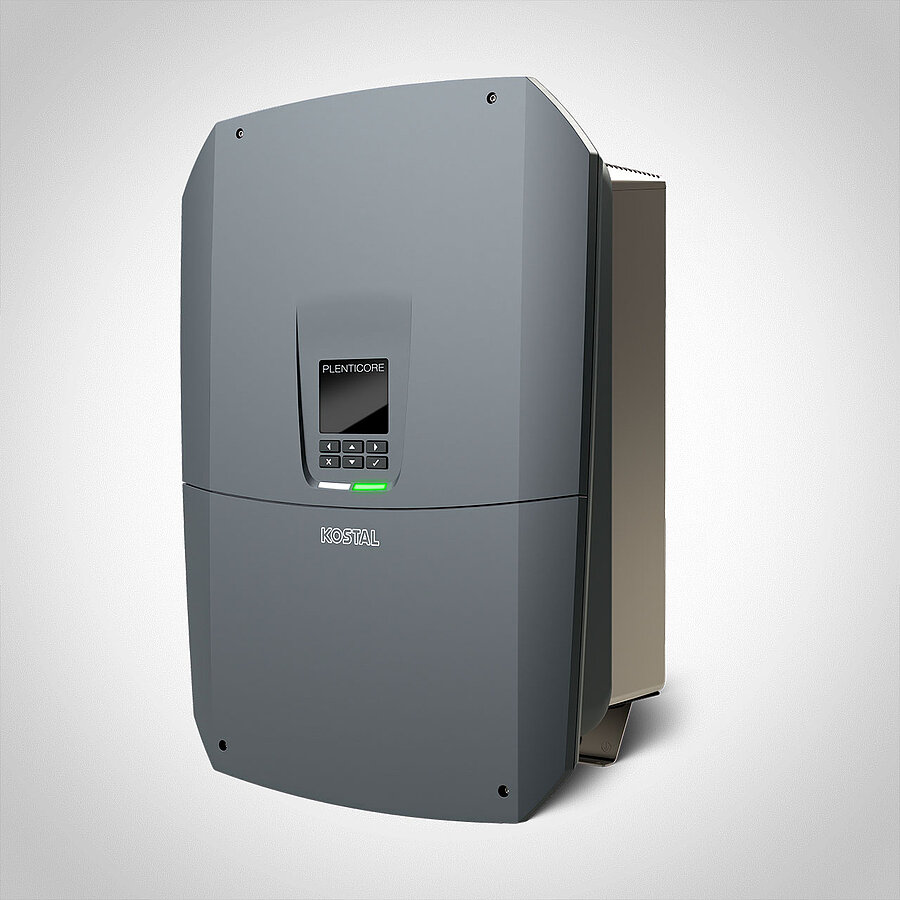
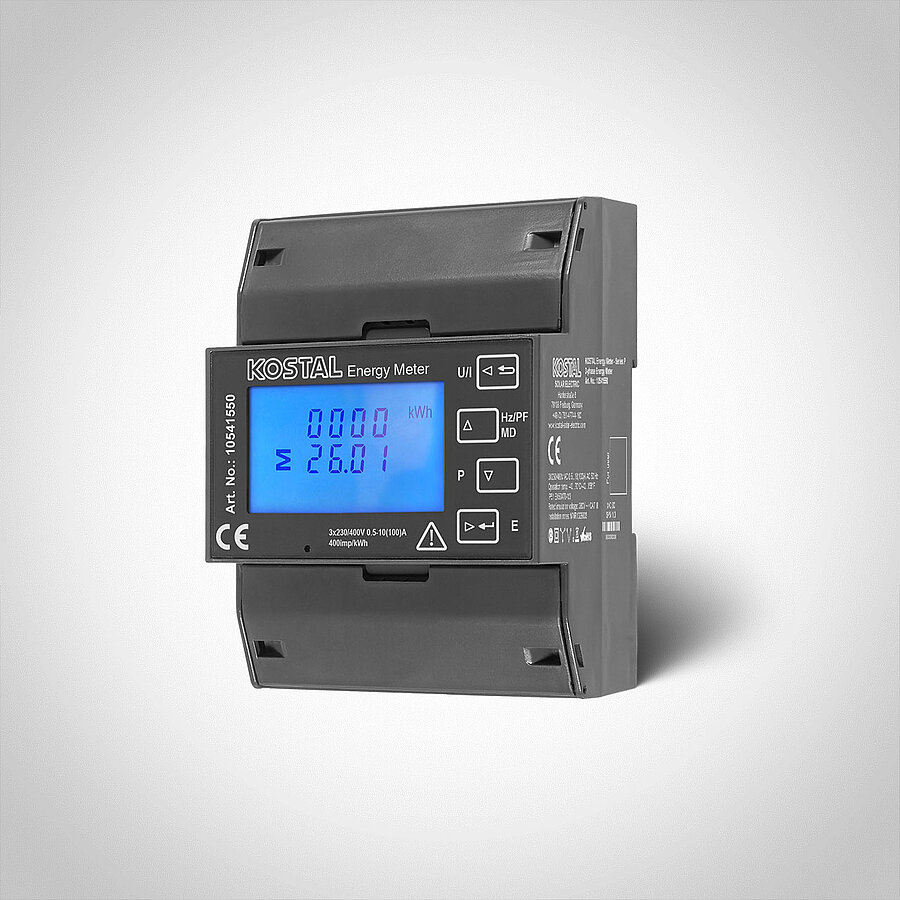
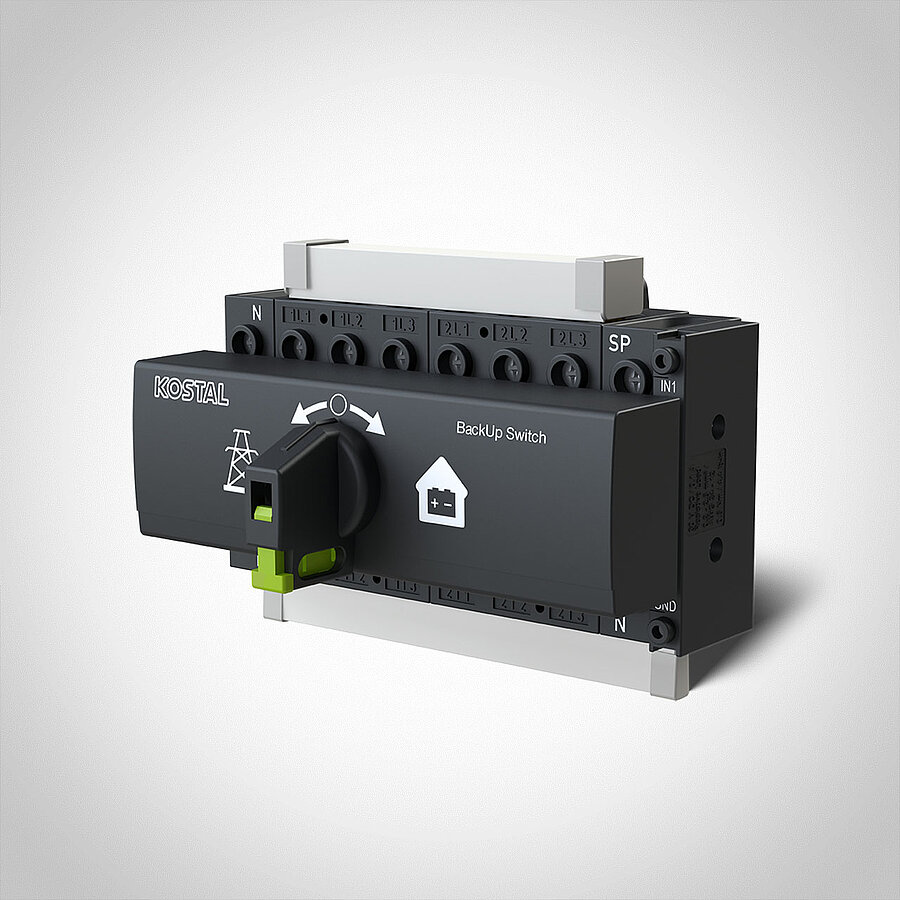
KOSTAL offers power and charging electronics solutions that enable photovoltaics, storage, energy metering and charging infrastructure to be integrated into a coordinated energy system.
Using energy on-site
For many businesses, a particular strength of photovoltaics lies in the timing of generation and consumption. Whilst solar power is being generated on the roof, machinery, plant, buildings or charging points require energy at the same time. Flexible consumers and battery storage can further optimise this overlap.
This means solar power is used right where it is generated – directly within your own business.
Discover photovoltaics for your home now and find your ideal KOSTAL specialist partner!