
 Installer portal
 Solar Academy
 Download
 Solar Terminal

Photovoltaics for agriculture
Make the most of your roofs to generate your own solar power.
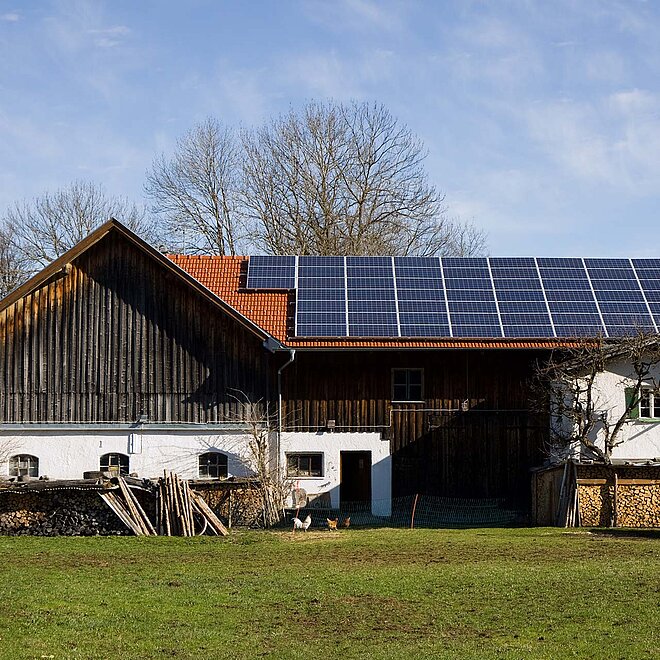
Stables, barns, machinery sheds and storage buildings often have large roof areas – and therefore offer ideal conditions for photovoltaic systems. At the same time, farms require energy for machinery, ventilation, cooling, feeding, milking equipment, lighting and other electrical appliances.
With your own photovoltaic system, you can generate electricity directly on your farm. This allows you to meet part of your energy needs yourself, reduce the amount of electricity you draw from the grid and make economical use of existing roof space.
Find a KOSTAL installer near you now
Why photovoltaics are of interest to farms
Farms vary greatly. A dairy farm has a different consumption profile to a poultry farm, an orchard or a farm with large machinery and storage halls.
For this reason, a PV system should not be sized solely on the basis of the available roof area. The key factor is the interplay between roof potential, electricity demand and consumption patterns.
- Using your own roof space: Many agricultural buildings have large, contiguous roof areas. Photovoltaics turn this into a space for generating your own energy – without taking up any additional agricultural land.
- Reducing electricity costs: Solar power used directly on your own farm does not need to be sourced from the public grid. The better the timing between electricity generation and consumption, the higher the level of self-consumption can be.
- Generating energy for day-to-day operations: Depending on the type of farm, the solar power generated on-site can be used to power a wide range of equipment – for example, ventilation, cooling, pumps, feeding and milking equipment, workshops or building services.
- Planning for future energy needs: Agricultural businesses are also becoming increasingly electrified. New machinery, charging infrastructure or additional electrical appliances may alter future electricity requirements.
A PV system should therefore not only suit current operations but also take future development opportunities into account.
Which agricultural buildings are suitable for photovoltaic systems?
In principle, many existing farm buildings are suitable:
- Livestock sheds
: Depending on the type of farm, large roof areas correspond to a regular energy requirement for ventilation, feeding, milking equipment or lighting. - Barns and machinery sheds
: Even buildings with low on-site consumption can provide large areas for electricity generation. The key factor here is the energy requirements of the farm as a whole. - Storage and cold storage buildings
: Cooling systems and other technical equipment can generate significant electricity demand, particularly during the day. - Workshops and farm buildings
: Even smaller roof areas can be incorporated into an overarching PV concept for the agricultural site.
However, it is important to note that not every roof is automatically suitable for photovoltaics. The condition of the roof, its structural integrity, orientation, shading and any existing roof structures must be assessed before planning begins.
How large should a solar panel system be on a farm?
A large roof area does not automatically mean that the entire area must be utilised. To ensure the correct sizing, the following points, amongst others, should be taken into account:
- available roof areas
- Structural integrity and condition of the buildings
- Orientation and shading
- annual electricity consumption
- Consumption over the course of the day and year
- Seasonal loads
- Existing grid connection
- Future additional consumers
- Desired self-consumption
- Feeding surplus energy into the grid or selling it
In agriculture in particular, consumption patterns can vary considerably. It is therefore worth carrying out an individual assessment of the entire farm.
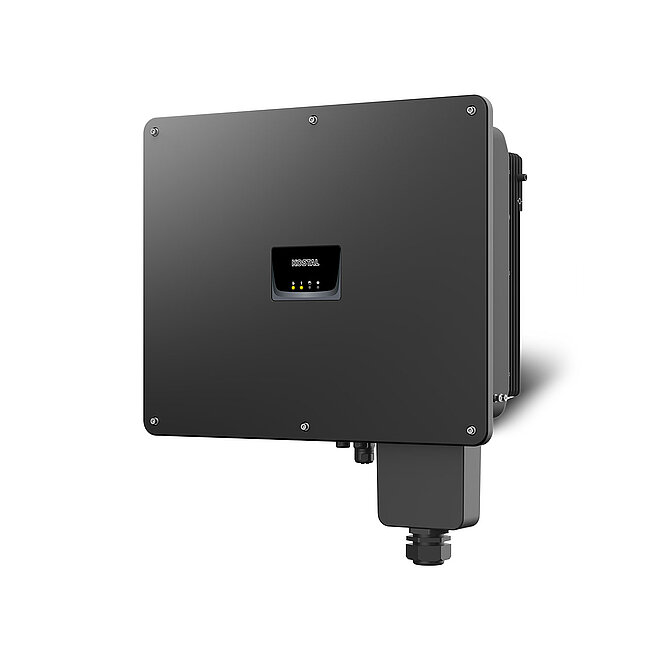
Inverters for photovoltaic systems in agriculture
For larger PV systems, in addition to efficient energy conversion, flexible system planning, professional communication and installation that is as straightforward as possible are key.
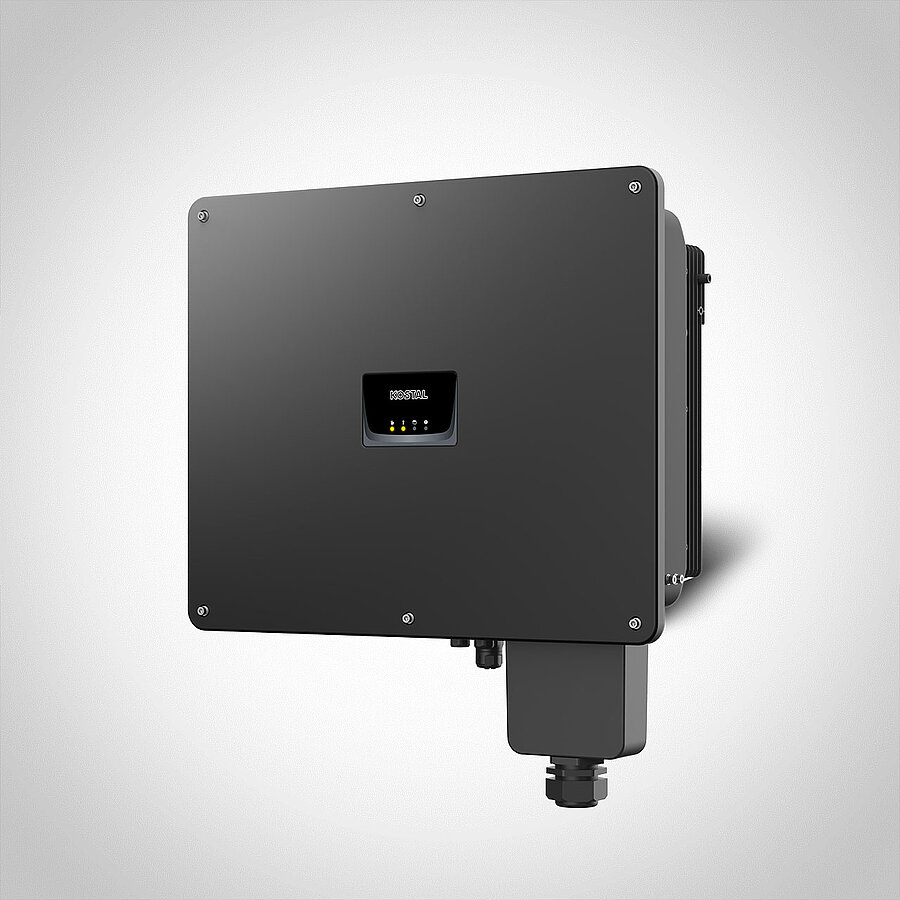
KOSTAL PIKO CI 30/50 G2
The PIKO CI G2 is designed for commercial photovoltaic projects and is available in
two power ratings.
PIKO CI 30 G2
- 30 kW AC rated power
- Up to 45 kWp PV output
- 3 independent MPP trackers
- 6 DC inputs
PIKO CI 50 G2
- 50 kW AC rated power
- Up to 75 kWp PV capacity
- 4 independent MPP trackers
- 8 DC inputs
The PIKO CI G2 thus offers a range of options for the design
of PV systems for agricultural use.
Tip: You can find the latest data sheet in our downloads section
Photovoltaics as part of your agricultural energy strategy
The energy supply for a farm is changing.
Photovoltaics can form the basis for this: solar power is generated directly on existing buildings and used on the farm itself. At the same time, future energy consumers can be taken into account right from the planning stage.
In this way, the roof of a livestock shed, barn or machinery shed becomes an active part of the farm’s energy supply.
Would you like to use your farm’s roof space for photovoltaics?
The extent to which photovoltaics make sense for your farm depends on your buildings, your electricity consumption and your future requirements.
A qualified specialist firm can assess your roof areas, load profile and technical requirements and develop a suitable system concept based on this.
Make the most of the energy generated on your roofs. Find a KOSTAL installer near you now