Installer portal
 Solar Academy
 Download
 Solar Terminal


Photovoltaics with backup power:
Power supply maintained even during a power cut
If the mains supply fails, it can take over your energy supply

A photovoltaic system generates electricity on your own roof. A battery storage system can store this energy for later use. This naturally raises the question: will I still have electricity in the event of a power cut? Not automatically.
For safety reasons, a standard photovoltaic system shuts down when the mains supply fails. Therefore, even having a battery storage system does not necessarily mean that the house will continue to be supplied with power.
However, with a backup power solution designed for this purpose, exactly that is possible: the house is disconnected from the mains and can be temporarily powered by the solar panel system and battery storage unit.
Would
you like your own solar system?
Find your nearest KOSTAL installer on our map.
Why a standard photovoltaic system shuts down during a power cut
As long as the public electricity grid is available, the photovoltaic system and the grid operate in tandem. The PV system supplies the house with self-generated solar power. Surplus energy can be stored or fed into the grid. If the system’s own energy is insufficient, electricity is drawn from the grid.
If the public grid fails, a standard grid-connected photovoltaic system must automatically disconnect from it. This is an important safety feature. This is because, for example, whilst work is being carried out on the electricity grid, the private photovoltaic system must not feed energy into the grid in an uncontrolled manner.
Therefore, the following applies: having a photovoltaic system ≠ automatic power supply in the event of a grid failure
A dedicated emergency power solution is required to ensure the house continues to be supplied with power.
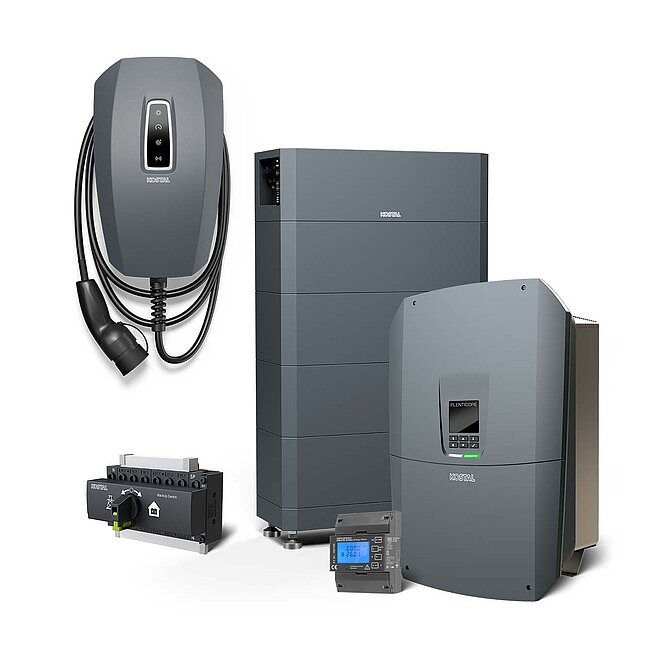
Be prepared when it matters most with the KOSTAL complete system comprising an inverter,
storage unit and back-up switch. Download the latest leaflet now!
What happens with a backup power solution?
A backup power solution detects a failure in the public electricity grid and safely disconnects the house from it. An energy system designed for this purpose can then provide a separate power supply for the building.
Put simply:
Normal operation
Public grid ↔ House ↔ Photovoltaic system + battery storage
Power cut
Public grid ✕ | safe disconnection | House ↔ battery storage + photovoltaic system
The home is thus temporarily supplied by its own energy system. When the public grid is restored, the system can switch back to normal grid operation.
Why the battery storage system plays an important role
The photovoltaic system alone cannot supply energy at all times. At night, no solar energy is available. Cloud cover can also significantly affect the power currently available. Battery storage therefore plays a key role in providing backup power. It can supply stored energy when the photovoltaic system is not generating enough electricity.
During the day: The photovoltaic system supplies the house and can charge the battery.
When PV output is low: The battery supports the power supply.
At night: The stored energy can be made available to the house.
The photovoltaic system and battery storage system thus complement each other even during a power cut.
How long will the electricity last during a power cut?
There is no one-size-fits-all answer to this. How long a building can be supplied with backup power depends, amongst other things, on
- how much energy is stored in the battery,
- the capacity of the battery storage system,
- how much solar power is generated during the power cut,
- which electrical appliances are switched on, and
- how high their power output and energy requirements are.
A fridge, for example, requires significantly less energy than an electric cooker, a heat pump or charging an electric car. That is why, during a prolonged power cut, the conscious use of the available energy also plays a role. The lower the consumption, the longer the available energy will last.
Not all backup power is the same
When planning, it is worth taking a close look at the required emergency power supply. This is because not every solution works in the same way, and the available power output may also vary.
The key question is therefore: what needs to continue to function reliably in the event of a power cut?
For many households, the main priority is to be able to continue using essential appliances such as lighting, the fridge, the internet or selected household appliances. Which appliances are intended for this purpose and how long the available energy will last should be taken into account right from the planning stage.
In this way, the backup power supply can be tailored specifically to personal requirements and the energy available from the photovoltaic system and battery storage.
Can the photovoltaic system continue to generate energy during a power cut?
With a backup power solution designed for this purpose, the photovoltaic system can also play an important role during a power cut. When the sun is shining, it can continue to supply energy to the home and – depending on the system’s status – support the battery storage system. This is particularly useful during prolonged power cuts.
This is because the available energy is then not limited solely to the battery’s state of charge at the time of the power cut.
Sun → Photovoltaic system → Powering the home → Supporting the battery
The amount of energy available still depends on solar irradiance, PV output, storage capacity and current consumption.
What about heat pumps and electric cars?
Large electrical loads deserve special attention when planning emergency power supply. A heat pump can require a comparatively high amount of electrical power. Charging an electric car also requires a lot of energy.
Whether, and to what extent, such appliances can be supplied during emergency power operation depends on the sizing and capacity of the entire system. Therefore, emergency power should not be planned according to the principle of ‘What works technically, somehow?’, but according to actual demand.
The crucial question is: what really needs to keep working in the event of a power cut?
On this basis, a specialist contractor can correctly size the photovoltaic system, inverter, battery storage and emergency power solution.
Considering backup power from the outset
Anyone planning a new photovoltaic system who values security of supply should consider the issue of emergency power as early as possible. This is because various components need to work together to achieve this:
Even with existing photovoltaic systems, the question may arise as to whether a storage or backup power solution can be retrofitted. The options available depend on the existing system and the components used.
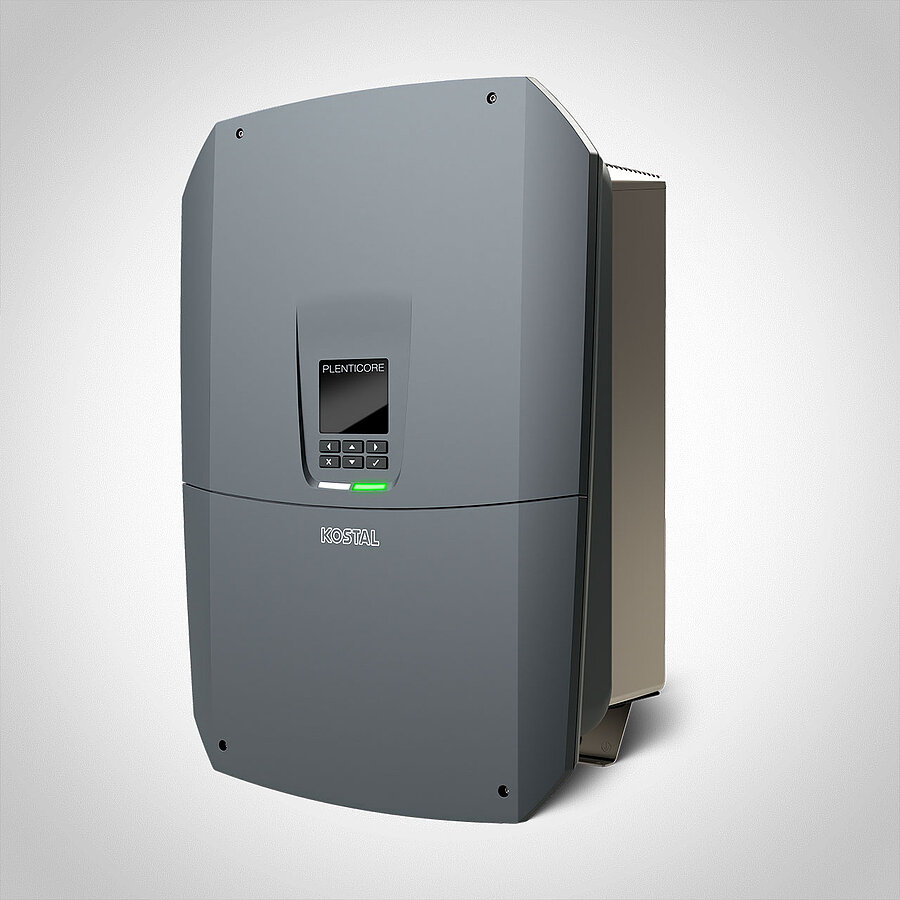
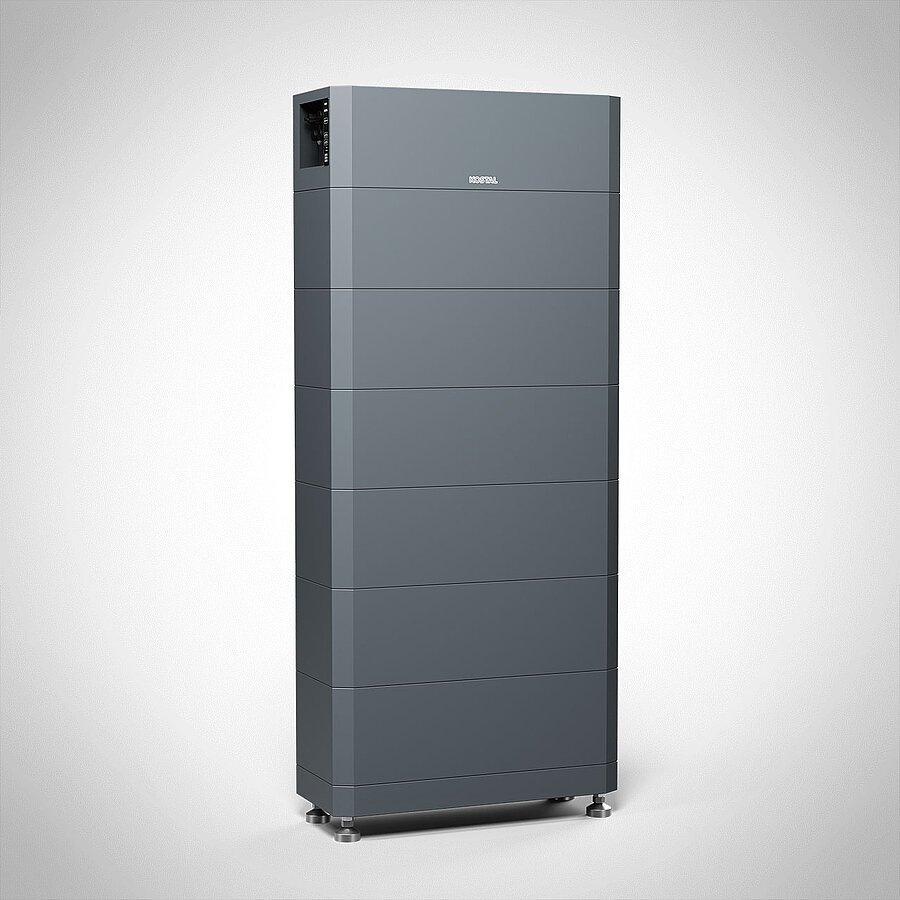
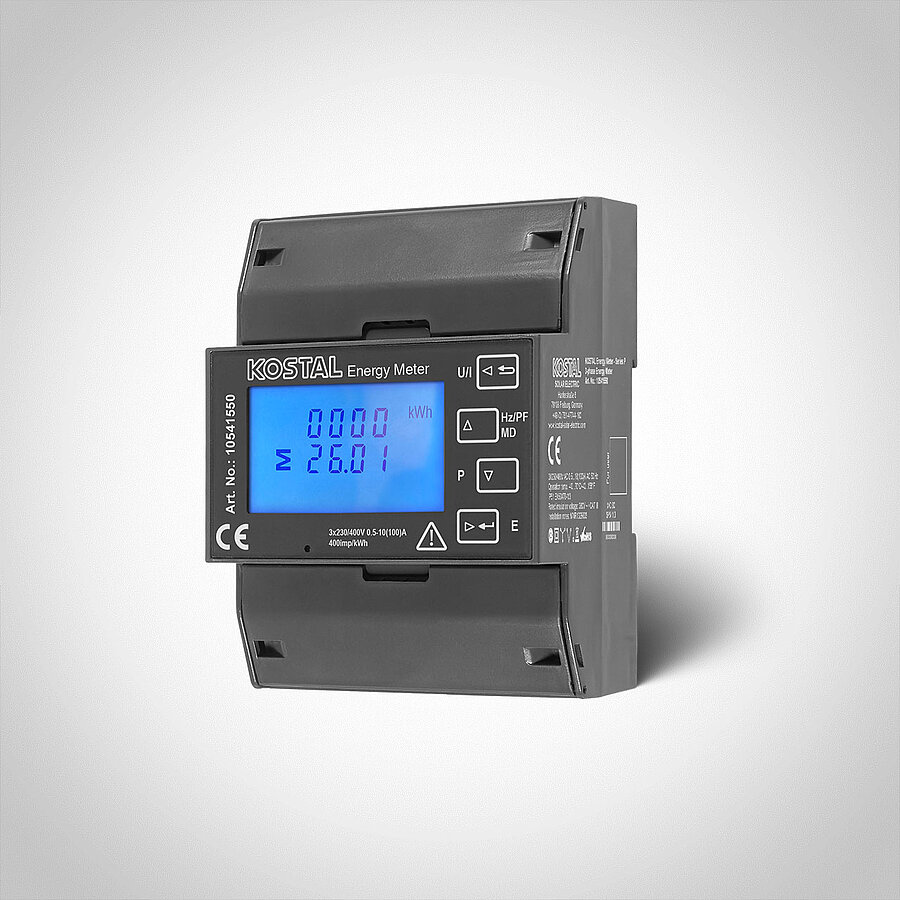
Respond automatically in the event of a power cut
In everyday life, an energy system should require as little attention as possible. This also applies to the backup power supply. An automatic transfer switch detects a mains failure and ensures the necessary safe disconnection from the public electricity grid. The energy system can then take over the power supply.
With the KOSTAL Auto BackUp Switch, this function can be integrated into a suitably configured KOSTAL energy system. When combined with a suitable PLENTICORE inverter and battery storage system, this creates an automatic backup power solution for the home. The aim: security of supply without the need for manual intervention in the event of a power cut.
Your own energy. Even if the grid fails.
Photovoltaics can do more than just reduce electricity costs and make your energy supply more independent. In combination with battery storage and a suitable backup power solution, self-generated energy can remain available even if the public electricity grid fails.
It is crucial that the components are planned as an integrated system right from the start. In this way, photovoltaics become not only your own energy source – but also an additional building block for the security of supply in your own home.
Discover photovoltaics for your home now and find your ideal KOSTAL specialist partner!