Installer portal
 Solar Academy
 Download
 Solar Terminal


Solar power and electric cars:
Charging with your own solar power
From your own roof straight onto the street
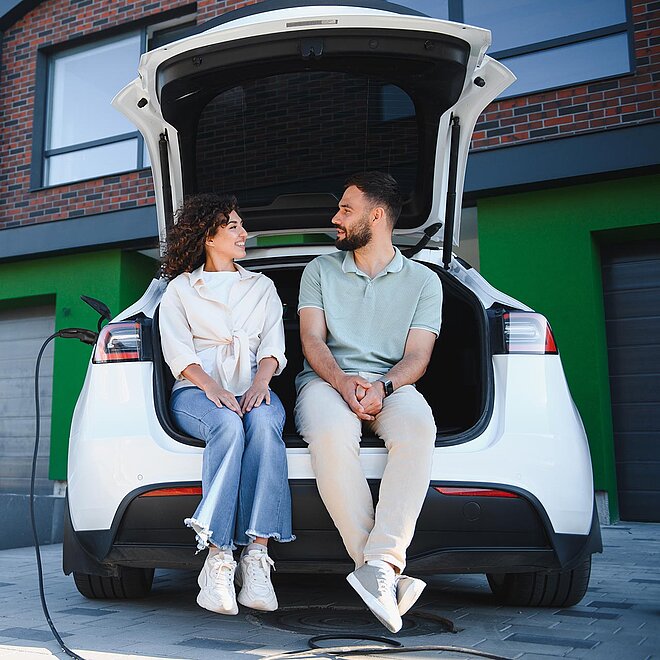
Anyone who drives an electric car needs electricity to charge it. With a photovoltaic system, some of this energy can come directly from your own roof. Instead of relying solely on electricity from the public grid, the electric car is charged whenever self-generated solar energy is available.
This combines two areas that go hand in hand: generating your own electricity and electric mobility. In this way, solar energy is transformed into mobility, kilometre by kilometre.
Would
you like your own solar system?
Find your nearest KOSTAL installer on our overview map.
Why solar power and electric cars go well together
An electric car increases a household’s electricity consumption. At the same time, it offers the opportunity to use a larger proportion of the solar power generated by the household directly. This is because, particularly on sunny days, a solar panel system often generates more energy than is needed in the home. This surplus can be used to charge the electric car.
The principle: Sun → Photovoltaic system → Powering the home → Charging the electric car
This turns the vehicle into another consumer within your own energy system – albeit a particularly flexible one. After all, an electric car often does not need to be charged immediately. What matters far more is that sufficient energy is available when it is needed again.
Every kilowatt-hour of solar power you use yourself can replace a kilowatt-hour of grid electricity that you would otherwise have to buy from your energy supplier. Download the latest leaflet now!
Charge when there is surplus solar power
Simply plugging an electric car into a wallbox does not automatically mean that it will be charged using as much solar power as possible. For this to happen, the energy management system needs to know how much electricity the photovoltaic system is currently generating and how much of that is required in the home. If there is any surplus solar energy available, this can be specifically used to charge the electric car.
This allows the proportion of solar power used for your own consumption to increase, whilst at the same time reducing the amount of electricity drawn from the public grid to charge the vehicle.
The wallbox connects the car to the photovoltaic system
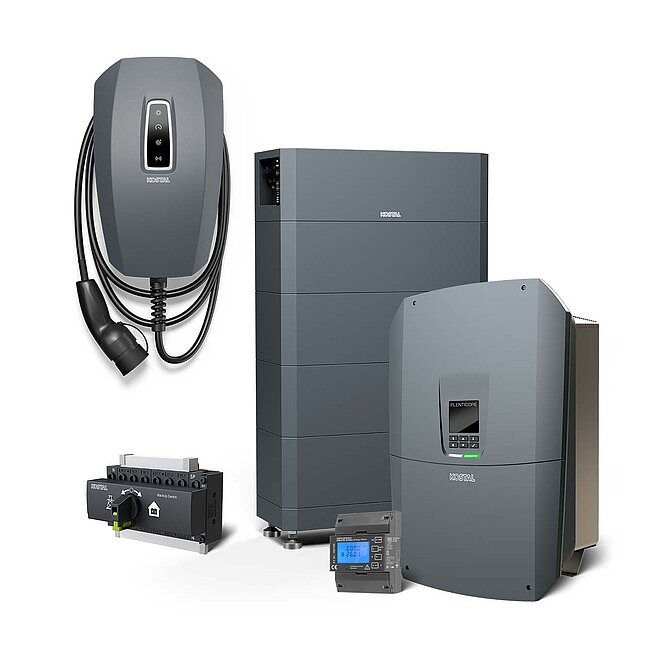
A wallbox does more than just ensure that an electric car can be charged safely and conveniently at home. When integrated into the energy system, it can also take into account how much solar energy is currently available. This turns simple charging into smart charging.
Depending on the system and the selected operating mode, you can, for example, specify whether the vehicle should be charged as quickly as possible or whether as much self-generated solar power as possible should be used.
Fast charging
You want the vehicle to be available again as quickly as possible. To achieve this, electricity from the grid can be used in addition to solar power.
Solar-optimised charging
The vehicle is charged primarily using available solar energy. This allows more of your own solar power to be used directly.
Which strategy makes sense depends on when the vehicle is needed again.
Why smart charging is important
Solar power is not constantly available. A cloud drifts past. Someone suddenly starts cooking in the house. The heat pump kicks in. At the same time, the electric car needs to be charged. To ensure that not all appliances demand energy independently of one another, an energy management system can keep track of generation and consumption.
It detects how much solar power is currently being generated, how high consumption is in the home, and how much energy is still available for charging the electric car. In this way, the electric car becomes part of an intelligently controlled energy system.
What happens when there isn’t much sun?
Of course, the sun doesn’t always shine when the electric car needs charging. If the vehicle is urgently needed, it can therefore still be charged using electricity from the public grid.
A photovoltaic system does not, therefore, mean that the electric car must be charged exclusively with solar power. Rather, the aim is to use as much of your own energy as possible whenever it is available.
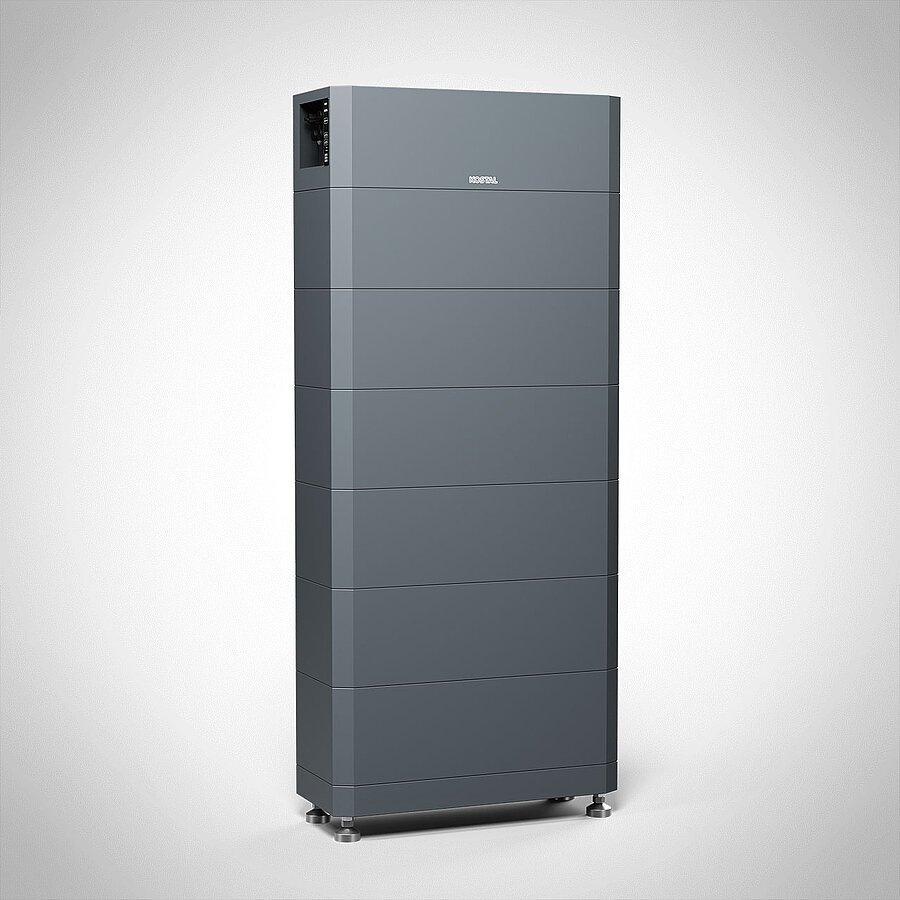
A battery storage system can also form part of this setup. It stores surplus solar energy and makes it available for use in the home at a later time. The energy system thus chooses between various options:
- Use solar power directly
- Use surplus solar power for charging
- Store solar power
- Draw electricity from the grid as required
Make smart use of low-cost grid electricity
Even when no solar power is currently available, smart charging can offer benefits. With a dynamic electricity tariff, the price of electricity changes throughout the day. For example, electricity may be cheaper at certain times than at others. If the vehicle is connected to the wallbox for an extended period, this provides additional flexibility.
The aim could then be:
To use solar power when it is available – and to draw electricity from the grid primarily when it is cheap.
Photovoltaics, wallboxes, energy management and dynamic electricity tariffs thus open up new possibilities for optimising the energy costs of electric mobility.
Read also: Understanding dynamic electricity tariffs →
Your home becomes your own charging station
Photovoltaics are fundamentally changing the way cars are powered. Instead of buying energy at a petrol station for every journey, some of it can be generated directly at home: Roof → Solar power → Wallbox → Electric car → Mobility
The amount of solar power that can actually be used for charging depends, amongst other things, on the size of the photovoltaic system, the household’s electricity consumption, the vehicle’s downtime, the charging power and individual driving habits.
That is why it is worth planning your photovoltaic system and charging infrastructure together.
An energy system that grows as we do
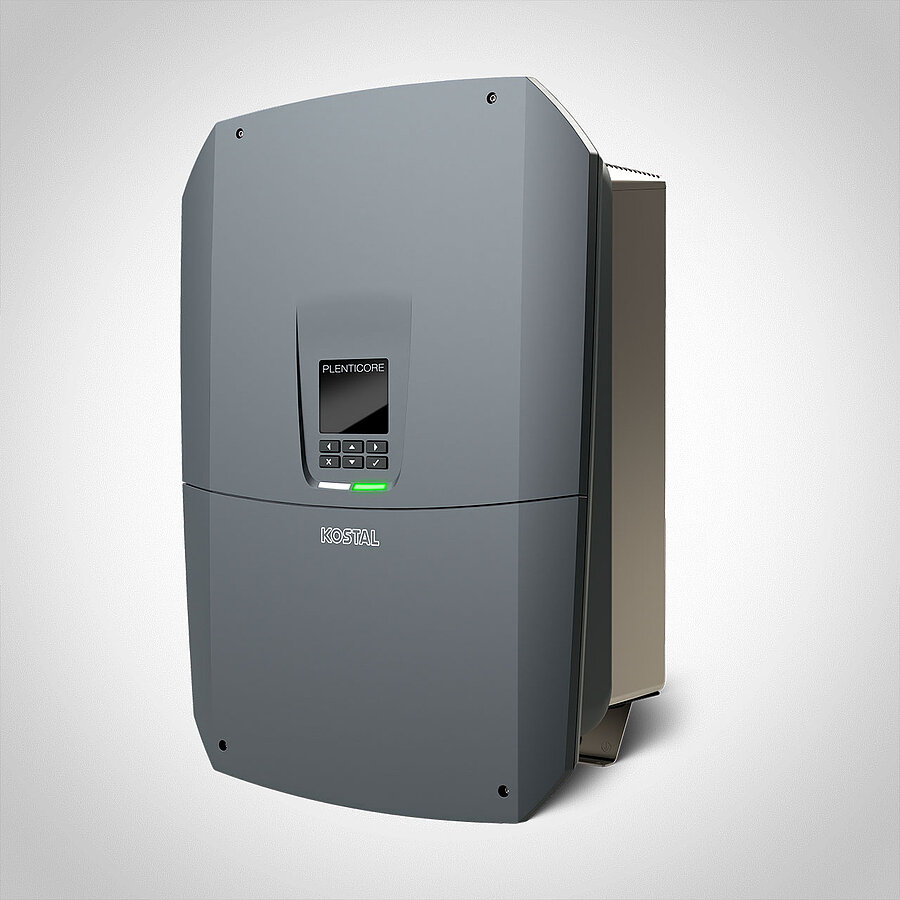
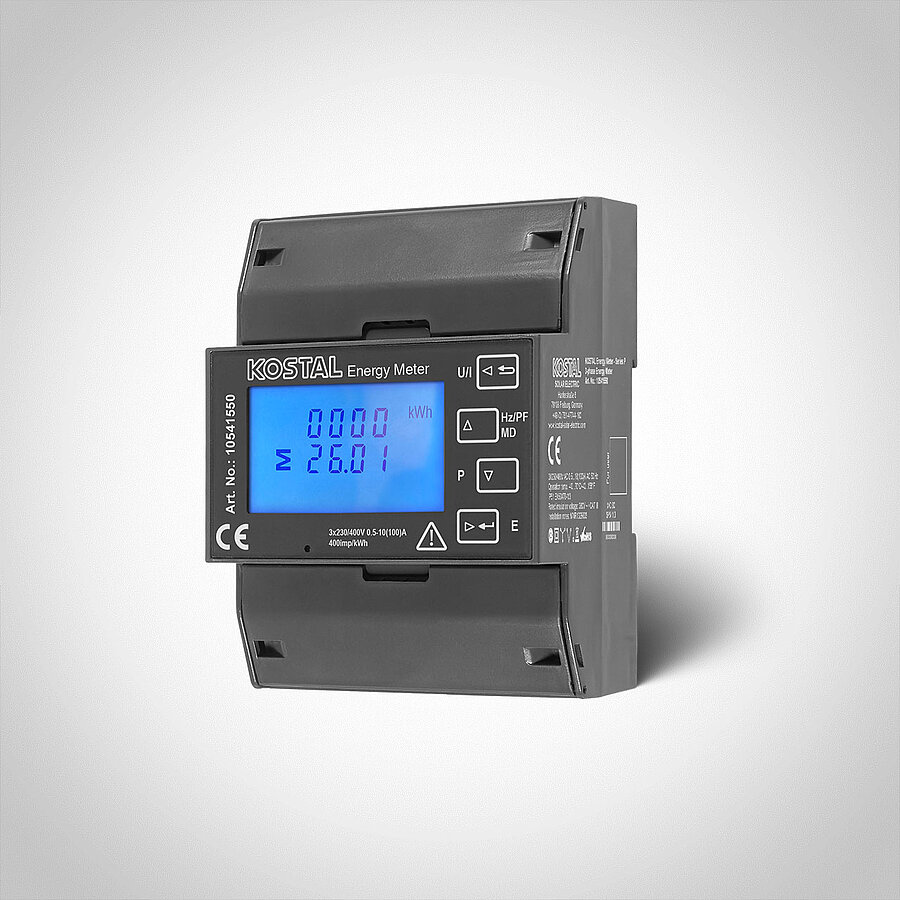
Perhaps the focus today is primarily on the photovoltaic system. Later on, battery storage, an electric car, a wallbox or a heat pump may be added. That is why a modern energy system should be flexible and expandable. KOSTAL integrates photovoltaics, inverters, energy metering, battery storage and charging infrastructure.
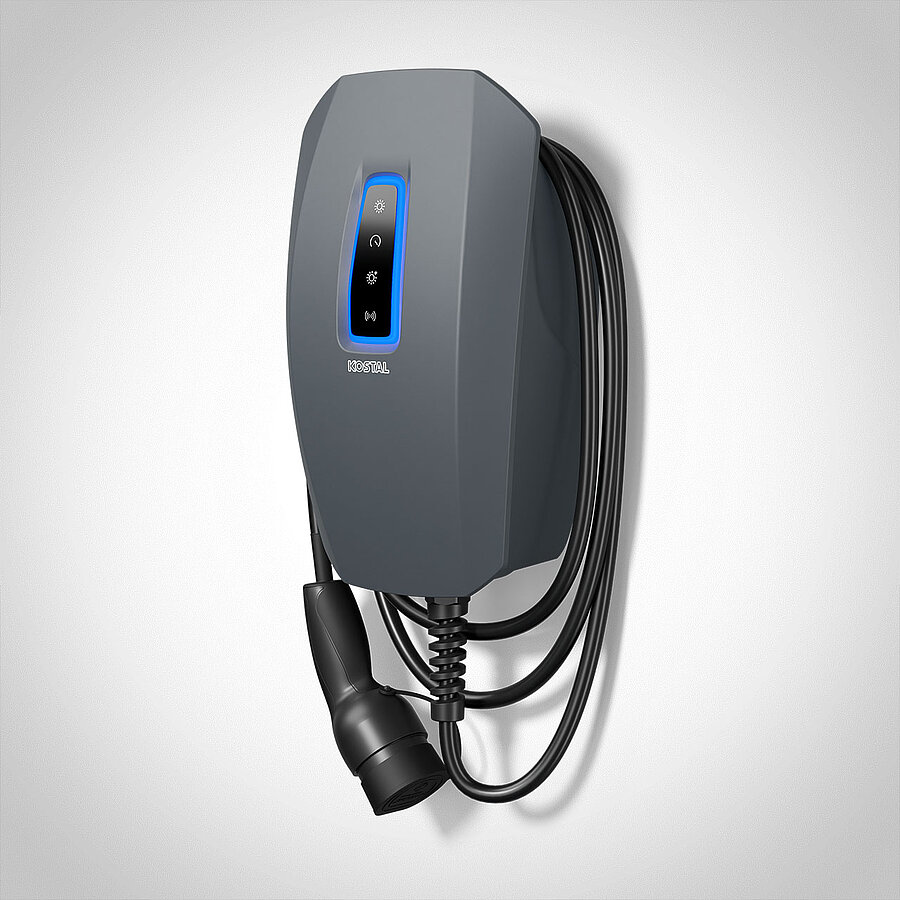
With the ENECTOR, the electric car becomes part of this system. Together with KOSTAL energy management, available solar power can be used specifically for charging. In this way, the energy supply grows in line with the needs of your own home.
Driving on solar power
A photovoltaic system doesn’t just generate electricity for the home. It can also provide energy for everyday mobility. With a smartly integrated wallbox, surplus solar power can be used specifically to charge your electric car.
In this way, photovoltaics and electric mobility combine to form a single energy system – and solar energy is transformed into mobility.
Discover photovoltaics for your home now and find your ideal KOSTAL specialist partner!