
 Installer portal
 Download
 Solar Terminal

Modern energy management "repowered" with KOSTAL, ZYC and Tibber
Increase self-consumption with repowering, battery storage and dynamic electricity tariffs
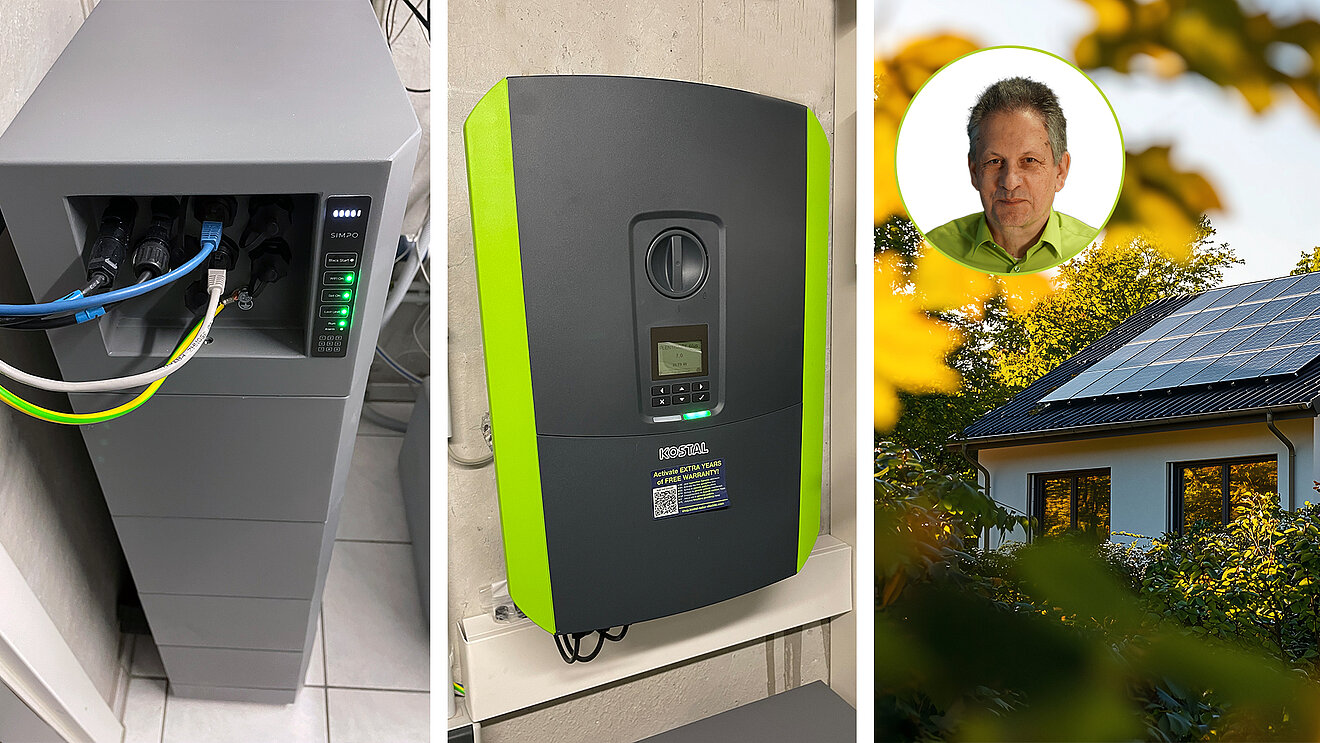
If system operators want to make their energy consumption more efficient and sustainable, centralised components for generating, storing and controlling electricity open up new possibilities. In the municipality of March near Freiburg, for example, Elektrotechnik Laukart GmbH equipped a photovoltaic system at the home of system operator Werner Palm.
The company, which has been established since January 2020, is a certified KOSTAL installation partner and offers comprehensive services relating to modern electrical and energy technology. With this project, the team was able to demonstrate its experience in the field of future-proof PV systems.
Repowering: a step towards the future
The centrepiece of the original system was a KOSTAL PIKO BA, which had been in reliable use for many years. As part of the modernisation, this was replaced by the current PLENTICORE plus G2 hybrid inverter.
Compared to its predecessor, the PLENTICORE plus G2 offers decisive advantages: three MPP trackers instead of two, an increased input current of 15 (instead of 12) amps, integrated WLAN, a modern web interface and compatibility with current high-voltage battery storage systems. The system thus creates the technical basis for more flexibility, higher yields and long-term expandability.
A brief introduction to the repowering system
The consistent further development of existing components is particularly evident in this system: for the battery storage, the system operator opted for a standard configuration with four modules (12.8 kWh) of the ZYC SIMPO HV storage system. Previously, a Sony Murata battery with 6 kWh was already in use in combination with the previous inverter.
The aim of system operator Werner Palm was to significantly increase self-consumption through the higher storage capacity and the utilisation of dynamic electricity tariffs, while at the same time acting more economically. To achieve this, the KOSTAL inverter was also connected to the cloud-based energy management solution from Tibber.
A brief introduction to the components
Intelligent energy management with Tibber
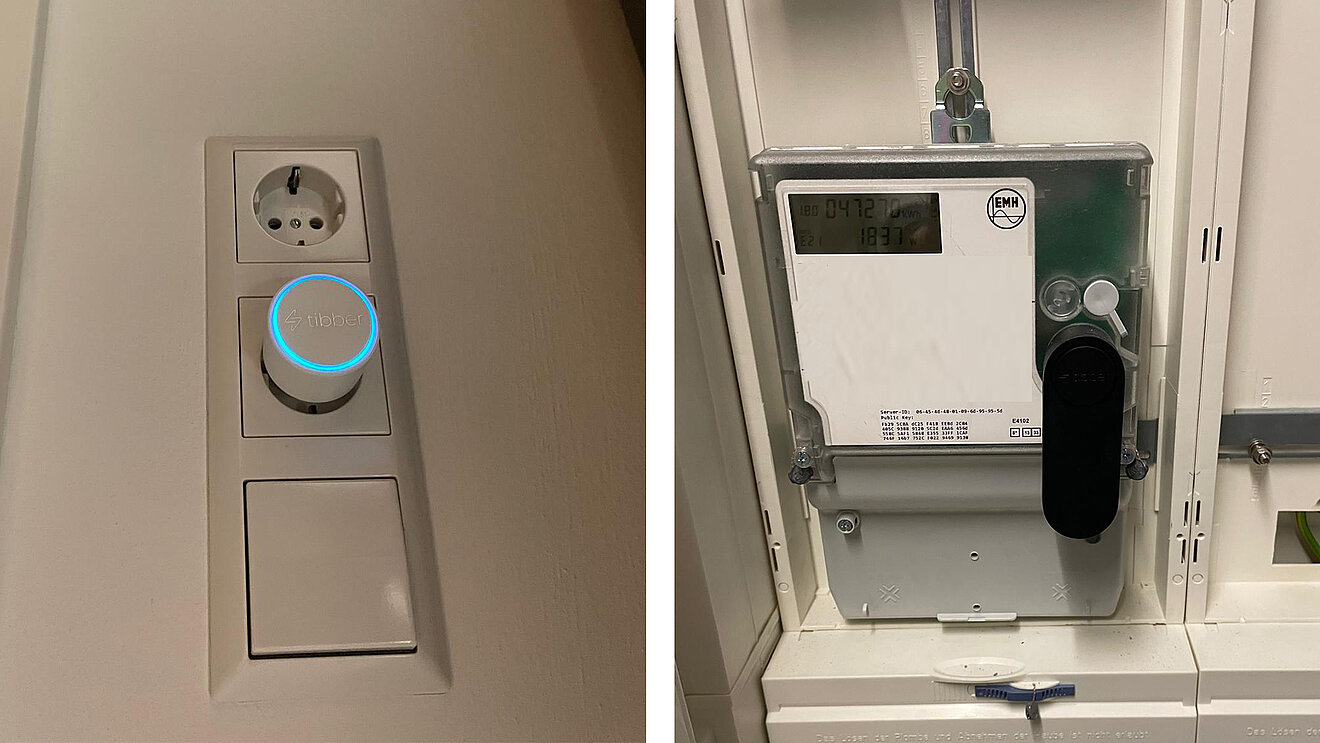
Linking the KOSTAL inverter to the Tibber platform gives Palm a transparent overview of generation, consumption and grid consumption. With the help of the Tibber Pulse IR, the electricity meter is read digitally and the measured values are transmitted to the Tibber cloud almost in real time.
On this basis, electricity can be used or stored when the market prices are particularly low. This load shifting enables noticeable cost benefits, especially for larger consumers in the household. Overall, the system ensures greater transparency, optimised use of your own PV energy and more efficient integration of the power grid.
Flexible storage solution with ZYC SIMPO HV
The ZYC SIMPO HV storage system impresses with its high level of modularity. It was possible to start with just two modules (6.4 kWh) and later expand to four modules (12.8 kWh) without any major effort. The system is designed for easy installation and long-term scalability.
Sustainability, efficiency and future-proofing
"The move to the new system and the connection to Tibber was a logical step for me. I want to become more independent, optimise costs and make a contribution to the energy transition at the same time," says Palm. "It is particularly important to me that we were able to continue using existing components - this shows that sustainable solutions work over the entire life cycle."
As a result, the system is an example of how repowering can work together with modern inverter technology, modular battery storage systems and digital energy management platforms. The deliberate continued use of the existing battery emphasises that sustainability is not only achieved through new technology, but also through the responsible use of existing components.
Data on the system
- 61% of the energy generated is used directly in the household
- In 2025, 1,359 kWh was fed into the grid (an average of approx. 3.7 kWh per day)
- Target: Increase self-consumption to around 80% in 2026 through additional storage capacity and intelligent load shifting
With well thought-out planning, high-quality hardware "Made in Germany" and intelligent software, a modern, flexible and sustainable energy system was created in March. The plant operator and Elektrotechnik Laukart GmbH are thus demonstrating how repowering, storage integration and dynamic electricity tariffs are jointly paving the way to a future-proof energy supply.